Most workouts end the same way. You rack the weights or step off the treadmill, glance at the clock, and give your hamstrings a token twenty seconds before heading for the shower. It counts as stretching, technically. It just doesn't do much. Post-workout stretching is one of those habits almost everyone has an opinion about and almost nobody does well, largely because the mistakes are quiet. Nothing hurts, nothing clicks, so you assume it's working. The problems tend to be small — a bounce here, a held breath there, a side you always skip — and they add up to a routine that leaves you stiff the next morning and vaguely puzzled about why. Fixing them doesn't take more time. It takes attention to four things: when you stretch, how hard, how you breathe, and what the rest of your body is doing while you're at it.
Two opposite mistakes show up here. The first is dropping straight into deep static holds while you're still panting, heart hammering, sweat running into your eyes. Your muscles are warm, sure, but they're also fatigued and your control is sloppy. That's not the moment to push a hamstring to its end range.
The second is skipping the cooldown entirely and stretching four hours later, cold, on a kitchen floor, because you suddenly remembered. That's not useless — it's just a different session, and it needs a few minutes of walking or easy movement first.
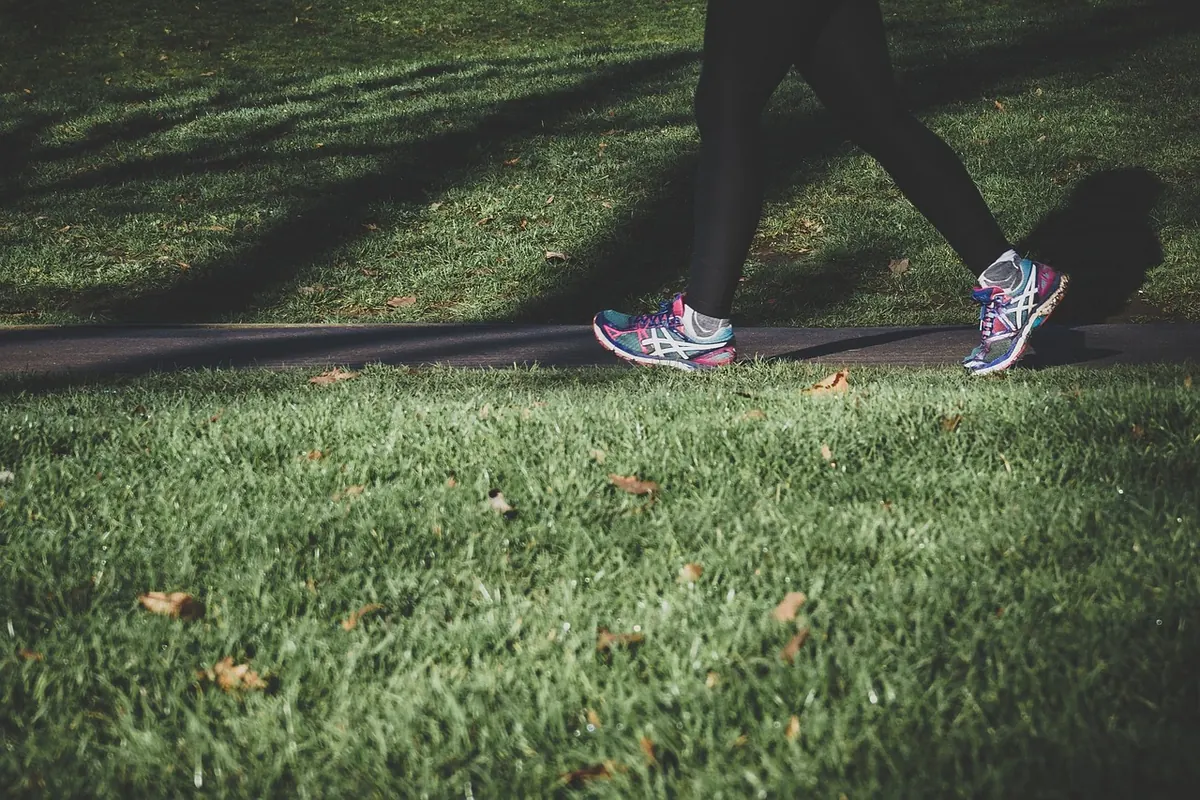
The fix is small: spend two to four minutes bringing your breathing closer to normal. Walk a lap, pedal gently, swing your arms. Once you can speak in full sentences, start stretching. Static holds belong after training; save the swinging, reaching, dynamic work for before it. And if you've just done something genuinely exhausting — a long run, a heavy leg session, a tough class — keep the stretches gentle. Shaky muscles and force are a poor combination.
The bounce is the classic. You fold forward, bounce five times toward your toes, and feel virtuous. What's actually happening is a stretch reflex: the muscle senses a rapid lengthening and contracts to protect itself. You are, quite literally, fighting your own leg.
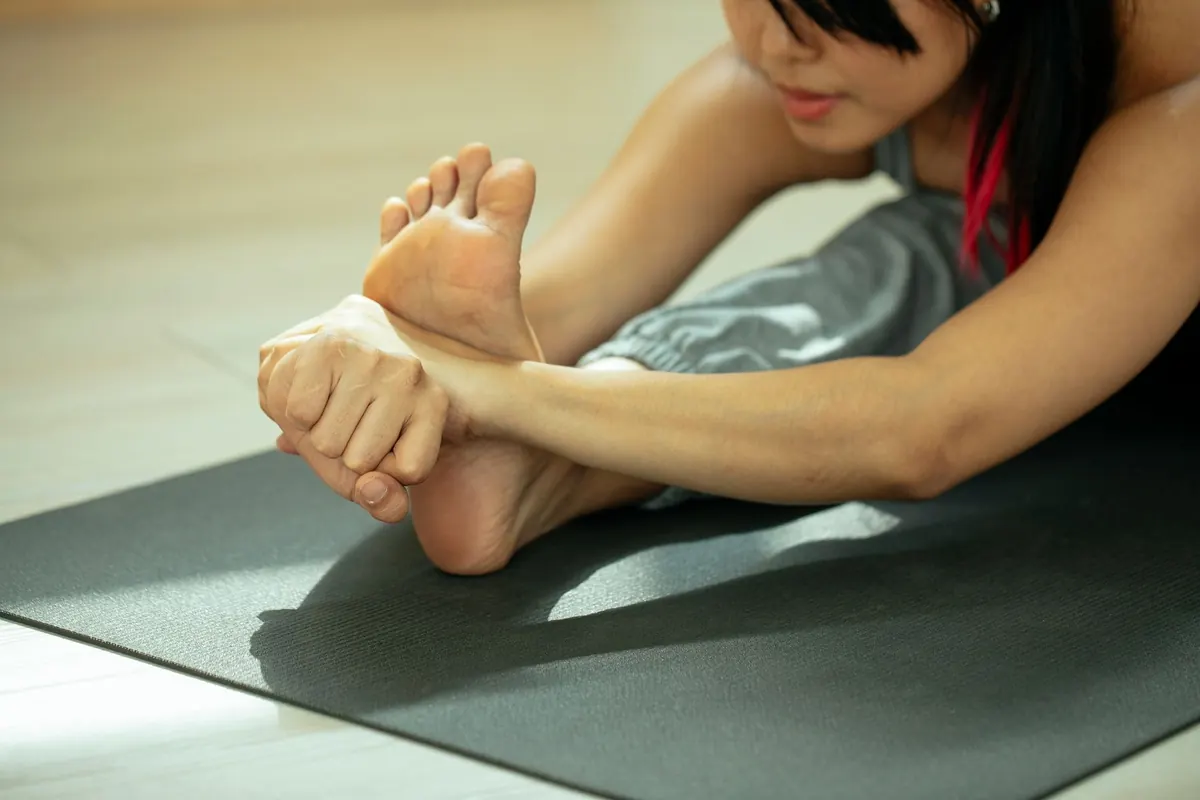
The same goes for forcing range with bodyweight, yanking an arm across your chest, or pushing until something burns sharply near the joint. A useful stretch feels like a broad, slightly uncomfortable pull along the belly of the muscle — the kind of sensation you could hold a conversation through. If you're clenching your face or gripping the mat, back off about ten percent and stay there.
Practice easing in over three or four seconds rather than dropping into position. When you feel the muscle start to guard, retreat a centimetre and wait. It usually releases within a couple of breaths, and that release is worth more than any amount of pushing.
One thing to respect: numbness, tingling or a sharp electric feeling is not a stretch. It's a nerve telling you to change position. Ease off immediately.
Watch people stretch and you'll see a lot of held breath. They sink into a hip flexor stretch, brace, and quietly stop breathing until it's over. That bracing tightens exactly the muscles you're trying to lengthen.
Try this instead: inhale normally through the nose as you set up, then exhale slowly as you ease into the stretch. At your end range, take one more slow breath and let the exhale carry you a fraction deeper. Keep your jaw loose and your shoulders down — tension travels.
A simple check: if you can't breathe slowly and steadily, the stretch is too intense, not too short. Four or five slow breaths is a decent guide for a single hold, and you don't need a timer to count them.
Ten-second holds are the most common form of wasted effort. Give each stretch somewhere between twenty and forty-five seconds, once or twice per side, and don't agonise over the exact number. What matters more is that you stay long enough for the muscle to stop protesting.
Symmetry deserves its own mention. Most of us are tighter on one side, and there's a temptation to spend three times as long on the cranky hip. Hold both sides for the same duration. Note the difference, don't chase it.
After leg day, the quads get all the attention while the hip flexors, calves and glutes — the muscles that actually got shortened by an hour of sitting beforehand — are ignored. A short whole-body pass beats a long, focused assault on one area.
It's also worth separating two ideas. Stretching is not a repair service for a problem. If a muscle feels permanently tight regardless of how much you stretch it, the answer is often strength work through that range, or simply more movement during the day. And if something is painful rather than tight, that's a conversation for a physiotherapist or your doctor, not a longer hold.
If you only have three minutes, do the hips and calves and let the rest go. A short routine you repeat beats a thorough one you avoid.
Attach the stretching to something you already do without thinking — the walk back from the gym, the five minutes before your shower, the point where your podcast ends. Keep it under six minutes. Skip it on days when you're completely drained and take a slow walk instead; that's not failure, it's judgment.
The habits worth keeping are the quiet ones: ease in, breathe out, hold both sides, and stop before it hurts. Nothing dramatic happens in a week. But after a month of stretching properly rather than performatively, most people notice the same thing — they stop dreading the cooldown, because it finally feels like it's doing something.
Photo: Miriam Alonso / Pexels